What Nobody Tells You About Running a Startup in India: The Financial Mistakes That Are Quietly Killing Your Business
Most Indian startup founders make the same financial mistakes — and most of them are entirely avoidable. Here's what nobody tells you before you start.
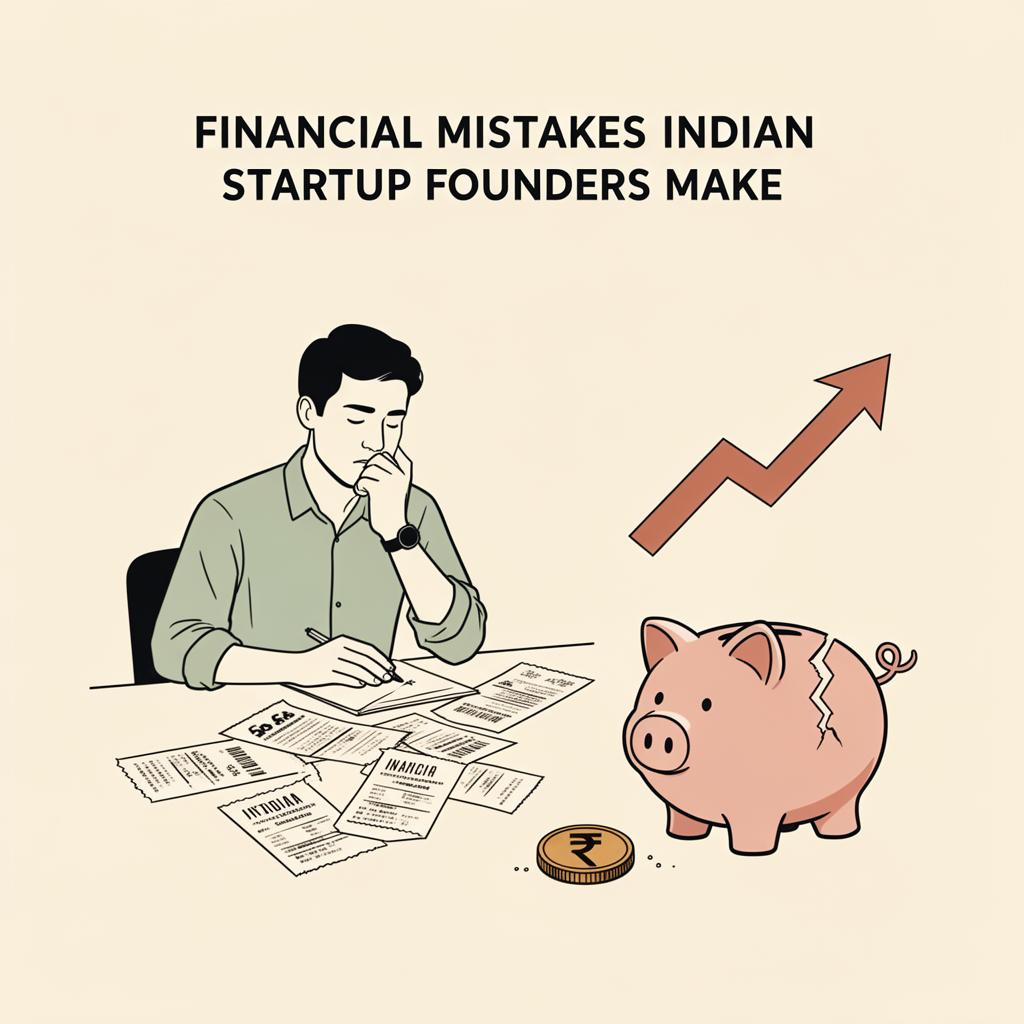
Building a startup is hard. Building one in India adds a layer of regulatory complexity that nobody warns you about before you incorporate. GST. TDS. Advance tax. ROC filings. Director KYC. Statutory audit. The list is long, and the penalties for getting it wrong are real.
Mistake 1: Treating Revenue as Profit
Revenue is the top line. Profit is what's left after every cost — salaries, rent, software, marketing, GST payable, tax, depreciation. Founders who confuse the two tend to overspend, overhire, and overdistribute — then find themselves in a cash crunch with a profitable-looking income statement and an empty bank account.
Know your gross margin. Know your net margin. Know your burn rate. These three numbers, understood clearly, will save you from more bad decisions than any other financial habit.
Mistake 2: Waiting for the CA to Tell You What's Happening
Your CA should be a monthly partner, not an annual filer. They should be telling you every month how much tax you owe, whether your GST is being filed correctly, what your actual profit looks like, and whether there are any compliance issues on the horizon.
Mistake 3: Not Understanding Your GST Liability
- Not filing nil returns — even with zero transactions, you still need to file GSTR-3B. Late fee: ₹20 per day (minimum ₹200 per return per month).
- Spending the GST you've collected — it belongs to the government. Treating it as revenue creates a liability that grows at 18% p.a. interest.
- Missing input tax credit — if you're paying GST on expenses but not claiming ITC, you're overpaying every month.
- Not reconciling GSTR-2B — your ITC must match what your vendors filed.
Mistake 4: Ignoring TDS Obligations
The moment you pay salaries above ₹2.5 lakhs per year, or pay contractors above certain thresholds — you become a TDS deductor. That means deducting, depositing by the 7th of the next month, filing quarterly returns (24Q / 26Q), and issuing Form 16 / 16A.
The penalty for not deducting TDS equals the TDS amount itself. Deducting but not depositing attracts 1.5% per month plus potential prosecution.
Mistake 5: Building Your Finance Stack Too Late
- Accounting software (Tally / Zoho Books / QuickBooks)
- Payroll software (Razorpay Payroll / Keka / Darwinbox)
- Expense management (Happay / Zaggle / Fyle)
- Payment gateway (Razorpay / Cashfree)
- Banking (HDFC / SBI / RazorpayX) with proper current account features
Mistake 6: Giving Equity Without Proper Documentation
Equity promised by handshake or WhatsApp is legally meaningless — and a compliance time bomb. Every grant must have a board resolution, a formal grant letter, and the appropriate MCA filing (Form PAS-3 for share allotments, ESOP scheme for options).
Mistake 7: Not Planning for Advance Tax
Advance tax is paid in four instalments — June 15, September 15, December 15, and March 15. Most founders learn this exists when their CA tells them in March that they owe tax for the entire year, plus interest under Sections 234B and 234C. The interest alone can run into lakhs.
Mistake 8: Confusing Cashflow with Business Health
A startup can be profitable on paper and bankrupt in practice. Maintain a rolling 13-week cash flow forecast — every expected inflow (collections, investment tranches) and every expected outflow (salaries, vendors, taxes, rent). It tells you exactly where your cash will be — and gives you time to act if a crunch is coming.
The One Thing That Changes Everything
Almost every mistake here comes down to the same root cause: founders who aren't looking at their financial data regularly enough to catch problems before they become crises. Monthly book-closing. Weekly cash flow review. Quarterly tax planning. Annual audit and ROC compliance. When these four rhythms are in place, the financial side of running a startup becomes predictable.
Want this handled for you?
FileMyBooks gives you a dedicated CA, monthly bookkeeping, GST and ROC filings, and investor-ready reports — all in one plan.